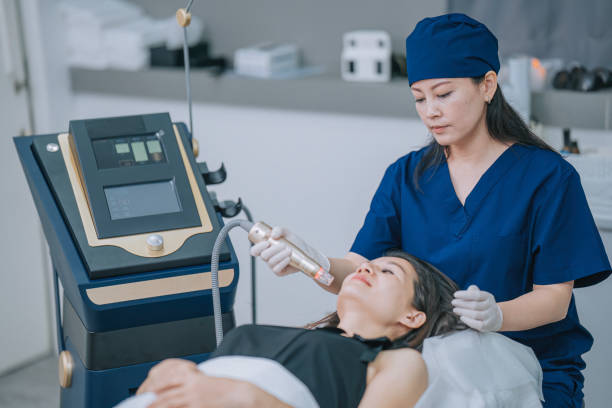


Quick Answer: A skin rejuvenation treatment is a broad category covering procedures that improve skin texture, tone, and firmness at once, including microneedling, chemical peels, IPL photofacials, and laser resurfacing. Most plans combine two or three methods over several sessions, with visible improvement in texture and tone within four to eight weeks.
Ask five dermatology patients what “skin rejuvenation” means and you’ll likely get five different answers. One thinks it’s a fancy facial. Another assumes it’s a single laser zap that erases ten years overnight. Neither is quite right, and that confusion is exactly why so many people end up disappointed with a treatment that was never going to solve their specific concern in the first place.
Skin rejuvenation isn’t one procedure. It’s a category, and picking the wrong tool inside that category wastes both money and time.
The Three Things Rejuvenation Actually Targets
Aging skin shows up as a mix of three distinct problems: texture (roughness, enlarged pores, fine lines), tone (sun spots, redness, uneven pigmentation), and structure (sagging, volume loss, deep wrinkles). A single treatment rarely fixes all three equally well.
Microneedling, for instance, excels at texture because it creates controlled micro-injuries that trigger collagen production in the surface layers. IPL, or intense pulsed light, is built almost entirely around correcting tone by targeting pigment and broken capillaries. Chemical peels split the difference, working on both texture and pigment depending on the peel’s depth and the acid used, whether that’s glycolic, salicylic, or TCA.
This is why a good provider asks detailed questions before recommending anything. If your main complaint is sun spots and someone hands you a microneedling package, you’re going to be unimpressed with the results, not because microneedling doesn’t work, but because it was never built to fade pigment.
Microneedling: The Texture Workhorse
A microneedling device uses fine needles, typically 0.5 to 2.5 millimeters depending on the area and concern, to create thousands of tiny punctures in the skin. The body interprets this as injury and floods the area with growth factors, kickstarting new collagen and elastin production over the following weeks.
Add radiofrequency energy to the mix (RF microneedling, sold under names like Morpheus8 or Vivace) and you get heat penetrating deeper into the dermis at the same time, which compounds the tightening effect alongside the texture improvement. Most patients need three sessions spaced four weeks apart, and visible pore refinement tends to show up around the six week mark.
Chemical Peels and What Depth Actually Means
Not all peels are created equal, and “chemical peel” covers everything from a gentle at-home glycolic wipe to a medical-grade TCA peel that causes visible skin shedding for a week. Superficial peels (glycolic, lactic, mandelic acid) work on the outermost layer and require minimal downtime, often just mild flaking. Medium-depth peels (TCA at higher concentrations) reach into the upper dermis and address finer lines along with pigment, but expect five to seven days of peeling.
I’ve seen patients book a “rejuvenating peel” online without realizing the strength varies wildly between providers using the exact same chemical name. A 20% glycolic peel and a 70% glycolic peel are not the same treatment, and asking your provider for the specific concentration before booking isn’t being difficult, it’s being informed.
IPL Photofacials for Sun Damage and Redness
If years of sun exposure left behind brown spots, broken capillaries, or general redness, IPL is usually the most efficient fix. The device emits broad-spectrum light absorbed by pigment and hemoglobin, which then breaks down and clears through the body’s natural processes over one to two weeks. Spots often darken temporarily before flaking off, which surprises patients who weren’t warned this is normal and expected, not a complication.
IPL doesn’t meaningfully improve texture or firmness on its own. Patients chasing both tone correction and tightening typically need IPL paired with skin rejuvenation treatment approaches like microneedling or radiofrequency to address both concerns properly.
Laser Resurfacing for Deeper Concerns
For more pronounced wrinkles, acne scarring, or significant sun damage, ablative or fractional laser resurfacing goes deeper than microneedling or peels. Fractional CO2 lasers, for example, treat a fraction of the skin’s surface in a grid pattern, leaving surrounding tissue intact to speed healing while still triggering a strong collagen response in treated zones.
Downtime is the real tradeoff here. Full-face fractional resurfacing can mean five to ten days of redness and peeling, sometimes longer for deeper settings. It’s the most aggressive option in the rejuvenation category, and it’s typically reserved for patients who’ve already tried gentler treatments without getting the depth of correction they wanted.
Building a Realistic Treatment Plan
A single session of anything rarely produces dramatic change, and that’s by design. Skin rejuvenation works through cumulative biological processes, not instant transformation. A typical plan might combine an IPL series for tone, followed by microneedling sessions for texture, spaced out over three to four months. Mixing modalities like this tends to outperform repeating the same single treatment over and over, since each method addresses a different layer or concern.
Sun protection during the entire process isn’t optional. New collagen and freshly treated skin are notably more sensitive to UV damage, and skipping SPF can undo weeks of progress or, worse, cause hyperpigmentation that takes months to fade.
The Real Takeaway
Skin rejuvenation only works as well as the diagnosis behind it. The biggest mistake patients make isn’t picking the wrong device, it’s skipping the conversation that matches the right device to their actual concern. Before booking anything, ask your provider exactly what problem each recommended treatment is solving, and don’t settle for a vague answer like “it’ll make your skin look fresher.” You deserve a specific one.
Frequently Asked Questions
Q: What is a skin rejuvenation treatment?
A: It’s an umbrella term for procedures, including microneedling, peels, IPL, and laser resurfacing, that improve skin texture, tone, or firmness through controlled injury or light energy.
Q: How many sessions of skin rejuvenation treatment are needed?
A: Most plans involve three to six sessions depending on the method, spaced four to six weeks apart for collagen-building treatments.
Q: Does skin rejuvenation treatment hurt?
A: Discomfort varies by method. Microneedling and peels cause mild stinging, while IPL feels like a rubber band snap. Topical numbing is common for deeper treatments.
Q: Is skin rejuvenation treatment the same as a non surgical facelift?
A: Not exactly. Rejuvenation focuses on texture and tone, while a non surgical facelift typically emphasizes lifting and firming using heat-based or injectable methods.
Q: How long does it take to see results?
A: Surface improvements like glow can appear within days, but structural changes like reduced fine lines or improved firmness take six to twelve weeks.