


Mental health is a cornerstone of overall well-being, yet many people struggle to find practical strategies that fit their daily lives. With rising stress, anxiety, and burnout, individuals are turning to alternative approaches that emphasize presence, awareness, and resilience. One such approach is mindfulness coaching, which combines mindfulness practices with personalized guidance to help people manage stress, regulate emotions, and improve focus. Before beginning this journey, it is important to ask the right questions to ensure that mindfulness coaching aligns with your mental health goals.
What Is Mindfulness Coaching, and Why Does It Matter?
Mindfulness coaching is a structured process where a coach helps individuals cultivate awareness and presence in everyday life. Unlike therapy, which often focuses on experiences, mindfulness coaching emphasizes the present moment and actionable strategies for the future.
The Core Purpose of Mindfulness Coaching
- Encourages awareness of thoughts and emotions without judgment
- Builds resilience to handle stress and setbacks
- Promotes balance between personal, professional, and emotional life
- Helps individuals create sustainable practices for long-term mental health
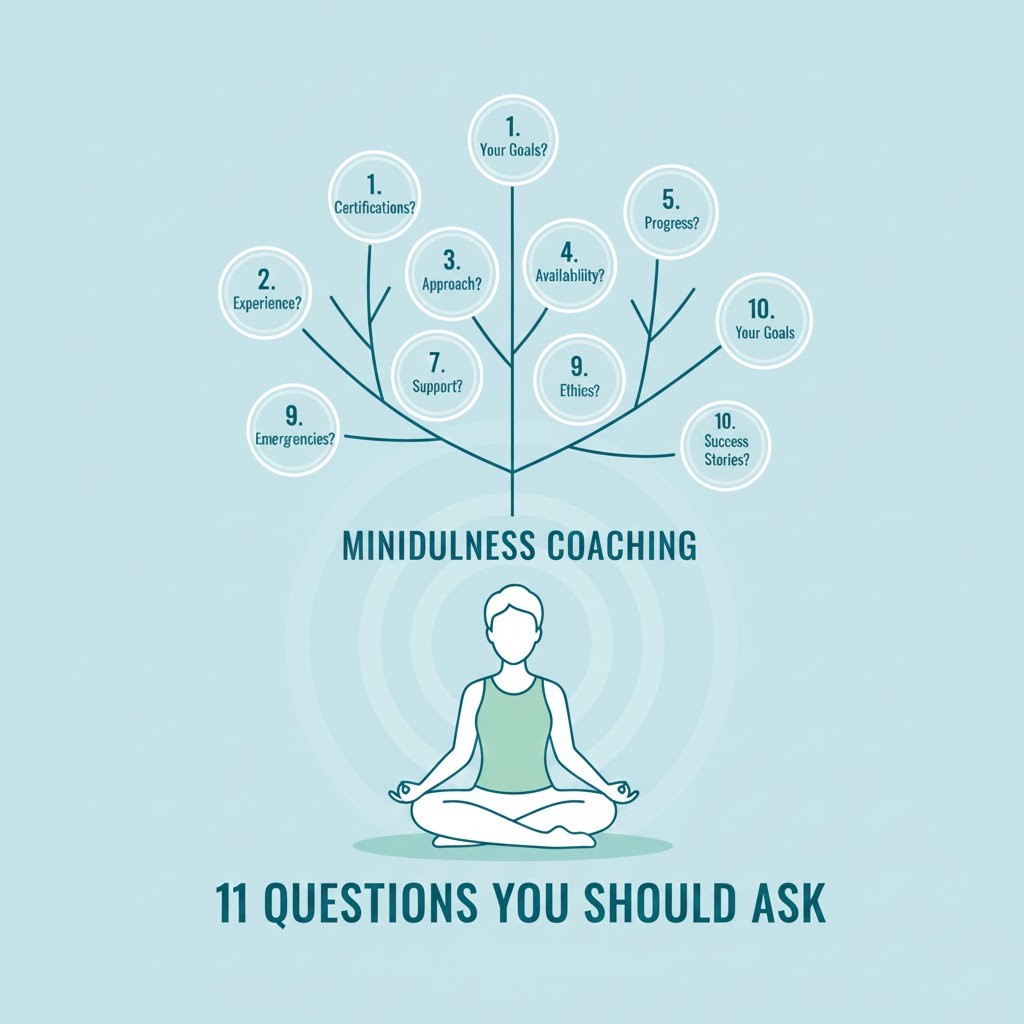
11 Questions to Ask Before Starting Mindfulness Coaching
1. What Are My Mental Health Goals?
Clarify whether you want to reduce stress, improve focus, or build emotional resilience. Clear goals help guide the coaching process.
2. How Does Mindfulness Coaching Differ from Therapy?
Therapy often addresses past trauma or clinical conditions, while coaching focuses on present-moment awareness and future growth.
3. What Techniques Will Be Used?
Ask about breathing exercises, journaling prompts, guided meditations, or other tools that may be part of the coaching process.
4. How Will Progress Be Measured?
Understanding how success is tracked through journals, feedback, or self-assessment ensures accountability.
5. What Is the Coach’s Background?
A qualified coach should have training in mindfulness practices and experience working with individuals facing stress or emotional challenges.
6. How Often Should Sessions Be Scheduled?
Consistency is key. Weekly or bi-weekly sessions often provide the structure needed to build lasting habits.
7. Can Mindfulness Coaching Help with Stress Management?
Yes, mindfulness coaching equips individuals with coping mechanisms for daily stressors, helping reduce anxiety and improve relaxation.
8. Will This Improves My Relationships?
By practicing presence and empathy, mindfulness coaching can strengthen both personal and professional relationships.
9. How Does Coaching Support Emotional Regulation?
Mindfulness coaching teaches techniques to pause before reacting, which helps manage anger, sadness, or frustration.
10. What Role Does Accountability Play?
Regular sessions and check-ins ensure individuals stay committed to their mental health goals.
11. Is Mindfulness Coaching a Long-Term Solution?
Mindfulness coaching is not a quick fix but a sustainable practice that supports lifelong mental health.
The Role of a Mindfulness and Wellness Coach
A mindfulness and wellness coach acts as a mentor and guide, helping clients integrate mindfulness into daily routines. They provide personalized strategies, accountability, and encouragement to ensure progress.
Example of Coaching in Action
Consider someone struggling with workplace burnout. A coach might introduce short breathing exercises before meetings, encourage mindful breaks during the day, and help the client reframe negative thoughts. Over time, these small changes lead to significant improvements in mental health.
Evidence Supporting Mindfulness Coaching
- Studies from Harvard and Stanford show that mindfulness reduces symptoms of anxiety and depression.
- Workplace programs incorporating mindfulness report higher employee satisfaction and lower turnover.
- Individuals practicing mindfulness regularly experience improved sleep quality and reduced stress-related illnesses.
Practical Steps to Begin Mindfulness Coaching
- Identify personal goals such as stress reduction or improved focus
- Research certified coaches with experience in mindfulness practices
- Dedicate time daily to mindfulness exercises
- Track progress using journals or apps
Conclusion
Mindfulness coaching is a purposeful, evidence-based approach to mental health. By asking the right questions before starting, individuals can ensure that coaching aligns with their goals and provides meaningful support. With personalized guidance, accountability, and practical tools, mindfulness coaching empowers people to manage stress, regulate emotions, and cultivate resilience. Whether you are seeking balance in your personal life or focus on your professional career, mindfulness coaching offers a pathway to greater well-being.